
How South Riding Has Evolved Since Homes Were Built in 1999–2000
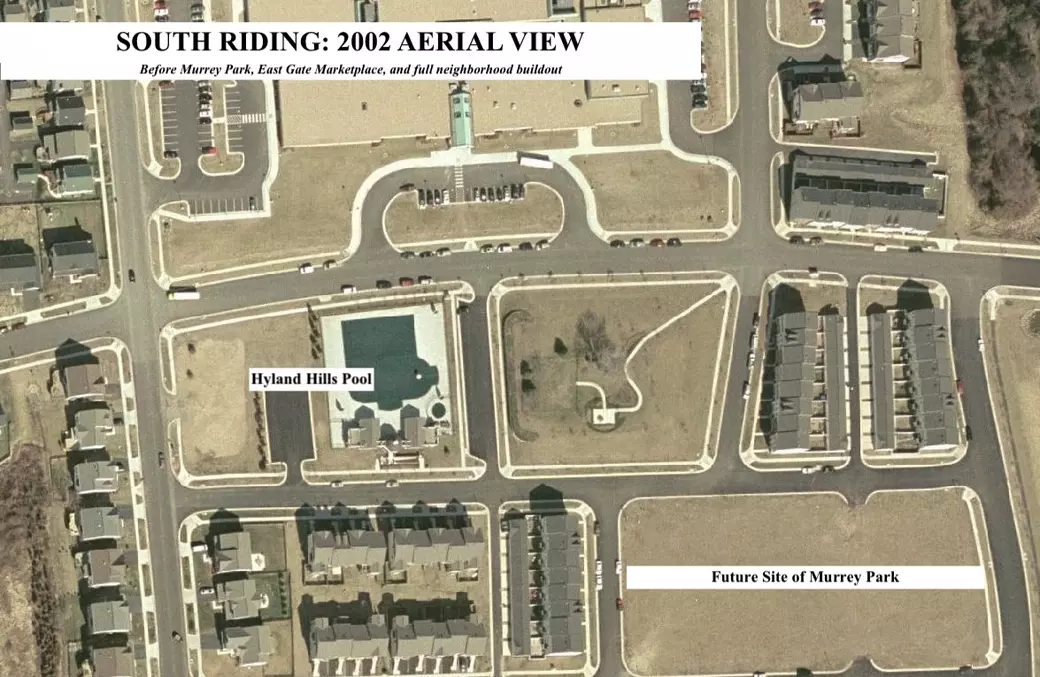
How South Riding Has Evolved Since Homes Were Built in 1999–2000
This 2002 aerial view of South Riding highlights early neighborhood development, including Hyland Hills Pool and the future site of Murrey Park.
South Riding has grown significantly since those early days, evolving from new construction into one of Loudoun County’s most established master-planned communities. When South Riding was first developed in the late 1990s and early 2000s, it was built with a very specific vision in mind: a master-planned community designed for long-term living, not quick turnover. More than two decades later, that vision has largely held — but the neighborhood itself has evolved in ways many homeowners don’t fully notice until they pause and look back.
Understanding how South Riding has evolved over time matters, especially for original owners and long-term residents who are beginning to think about what comes next.
A Community Designed for Longevity, Not Turnover
Unlike many newer developments built around faster resale cycles, South Riding was designed for people who planned to stay.
Homes built in 1999–2000 were often purchased by:
- Young families putting down roots
- First-time buyers planning to grow into their homes
- Homeowners prioritizing schools, space, and community
That original intent shows up today in lower turnover compared to nearby areas — something explored more deeply here: Why Families Stay Longer in South Riding Than Nearby Communities
This longevity has shaped not just the housing stock, but the culture of the neighborhood itself.
From New Construction to Established Community
In its early years, South Riding still felt new — landscaping was young, routines were forming, and many residents were settling in at the same time.
Over the years, several quiet but meaningful changes occurred:
- Trees and landscaping matured, changing the look and feel of streets
- Amenities became woven into daily life rather than treated as “extras”
- Neighbors transitioned from newcomers to long-term community members
What was once new construction is now established housing — a distinction that matters in today’s market. That shift is something many homeowners don’t fully recognize until they’ve lived here for several years.
What People Don’t Realize About Living in South Riding Until Year 3–5
How Homes Have Evolved Alongside Homeowners
As families stayed, their homes evolved with them. Rather than moving every few years, many homeowners chose to:
- Renovate kitchens and bathrooms
- Finish basements for added living space
- Add offices, gyms, or flex rooms
- Invest in outdoor spaces
For today’s sellers, this means:
- Homes often reflect years of thoughtful updates
- No two properties feel exactly the same
- Pricing and positioning require local insight
Understanding these differences is key when comparing homes that haven’t sold in 15–20 years.
The Rise of Original Owners and Long-Term Residents
One of the most defining features of South Riding today is the number of original or near-original owners still living in the community.
These homeowners often share common traits:
- Strong emotional ties to the neighborhood
- Significant equity built over time
- No urgency, but increasing curiosity about options
Many aren’t ready to sell — but they are ready to plan. This is where long-term strategy becomes more valuable than transactional advice. That long timeline often shapes how original homeowners think about future transitions, even when nothing is changing yet.
What Long-Term South Riding Homeowners Should Consider Before Making Their Next Move
How Buyer Perception Has Shifted Over Time
Buyer perception of South Riding has evolved alongside the neighborhood itself.
What once felt “farther out” is now seen as:
- Well-positioned within Loudoun County
- Established rather than speculative
- Attractive to families seeking stability and space
As a result:
- Demand remains strong when homes do come available
- Well-prepared listings attract attention quickly
- Pricing rewards preparation more than urgency
This evolution benefits homeowners who understand timing.
What This Evolution Means for Today’s Homeowners
If you’ve lived in South Riding for a long time, it’s easy to miss how much the community has changed — because it happened gradually. From a lifestyle and market perspective, that evolution creates opportunity.
Questions worth considering include:
- How does your home compare to others that haven’t sold in decades?
- Which updates matter most to today’s buyers?
- How does long-term ownership impact your flexibility going forward?
These aren’t questions to answer quickly — they’re best explored early.
Related Reading
- Why Families Stay Longer in South Riding Than Nearby Communities
- Living in South Riding, VA: What Locals Love (and What Buyers Should Know First)
- Is South Riding a Good Place to Live? The Ultimate 2025 Guide (From a Local South Riding Realtor)
Thinking About the Next Chapter in South Riding?
If you’re an original owner or long-term homeowner in South Riding and starting to think about what’s next — whether that’s years away or sooner than expected — planning now gives you more options later.
This isn’t about selling. It’s about understanding timing, equity, and flexibility.
South Riding Strategy SessionCategories
Recent Posts


Get More Information
